
Atomic 'Bombshell' Coming to PBS on January 6
Will debut on "American Experience"

Greg Mitchell started focusing on The Bomb as editor of Nuclear Times from 1982-1986, and has since written four books about the subject, hundreds of articles and, since 2021, two films for PBS.
As I noted here a few weeks back, a new 80-minute film that I’ve been involved with for several years is finally coming to PBS via its hallowed “American Experience” series on January 6. It’s “Bombshell: The Fight to Control the A-Bomb’s Story,” directed by Ben Loeterman. I was one of its historical advisers and appear on screen half a dozen times as a talking head (as well as commenting numerous times off-screen). I must say it is an honor that I provide the closing commentary before the credits roll.
Here’s the current brief trailer for “Bombshell.”
The film focuses on the same time period (1945-1947), and many of the same subjects, covered by my 1995 book with Robert Jay Lifton, “Hiroshima in America” and my recent “The Beginning or the End: How Hollywood—and America—Learned to Stop Worrying and Love the Bomb,” as well as my PBS film and book “Atomic Cover-up.” My latest PBS film, “The Atomic Bowl,” on the surreal U.S. all-star football game near ground zero in Nagasaki on January 1, 1946—still streaming over PBS.org and appearing on hundreds of stations next month—also comes out of that time period.
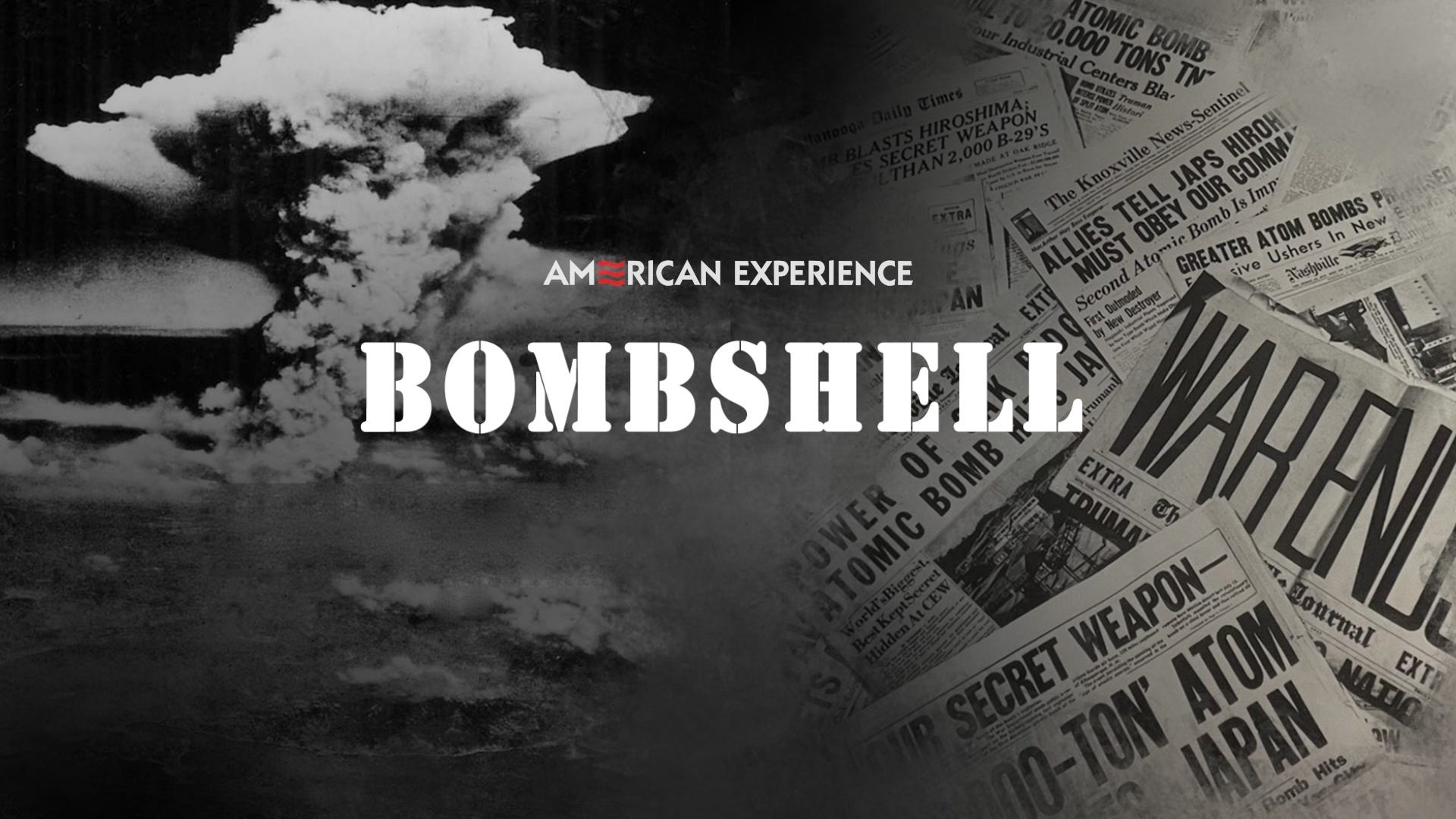
An excerpt from the “Bombshell” press release below. I’ll be writing about some of the individuals mentioned in it during the coming weeks. If you are interested in talking to anyone about “Bombshell” let me know via Comments or Message or via my email. Thank you.
From the release:
The U.S. media became pivotal in promoting — and then piercing — the official narrative. While Truman publicly declared that “it has never been the habit of the scientists of this country or this government to withhold from the world scientific knowledge,” that is precisely what General Groves, leader of the Manhattan Project, insisted upon. His strategy was a PR campaign fueled by press releases written anonymously by William L. Laurence, the science writer for The New York Times and an undercover member of the Manhattan Project team. Laurence’s assignment: downplay the radiation effects from the bomb.
Not every journalist adhered to the official line. First on the ground in Hiroshima was Japanese American Leslie Nakashima, who had worked for the United Press in Tokyo until Pearl Harbor. After the bombing, he rushed to Hiroshima to check on his mother. She was safe, but the devastation stunned him. Although the United Press syndicated his story, many American papers censored it, including The New York Times, which removed all references to radiation poisoning.
An accompanying warning by General Groves told readers that all reports out of Japan “are pure propaganda.”
Australian freelancer Wilfred Burchett dodged checkpoints to reach Hiroshima, while Chicago Daily newsman George Weller became the first American reporter into Nagasaki. The radiation poisoning Burchett witnessed was detailed in a front-page story headlined “Atomic Plague.” It was published in London and reprinted around the world, but Americans did not see it. Meanwhile, George Weller submitted his dispatches to General MacArthur for approval, who instead confiscated them.
Several African American journalists also refused to buy the government’s narrative. Woven through their coverage is the suspicion that the bomb has been deliberately reserved for useagainst Asians rather than Europeans. Writing in the Chicago Defender, Langston Hughes argued that the bombs were dropped on “Japs,” because the Japs are “colored.” Charles H. Loeb, who wrote for the Black press, reported on the residual effects of radiation poisoning, but there was no follow-up in the mainstream media.
The official narrative finally began to crack in August 1946 when John Hersey’s article on Hiroshima was published as an entire issue of The New Yorker. While Groves and Laurence presented a benevolent spin on atomic power, Hersey’s reporting revealed the enormous moral and human consequences. The issue sold out overnight and the article was reprinted around the world. The Truman administration doubled down on its efforts to sell its official story, including a government-approved Hollywood movie, “The Beginning or the End.”
The only on-the-ground photos to survive August 6 were taken by Hiroshima news photographer Yoshito Matsushige, but they were confiscated just after Japan formally surrendered. In 1952, after censorship was lifted, LIFE magazine published them, allowing Americans to finally peer under the mushroom cloud for the first time.
Says filmmaker Ben Loeterman: “Bombshell has much to teach us, and the press, about reporting peace and security issues around the world today, from India and Pakistan to North Korea and Japan to Israel and Iran.”
Thanks for the heads up. It's now on my calendar!