
Atomic "Bombshell" on PBS Tonight
Via "American Experience." Let me know what you think.

A timely reminder:
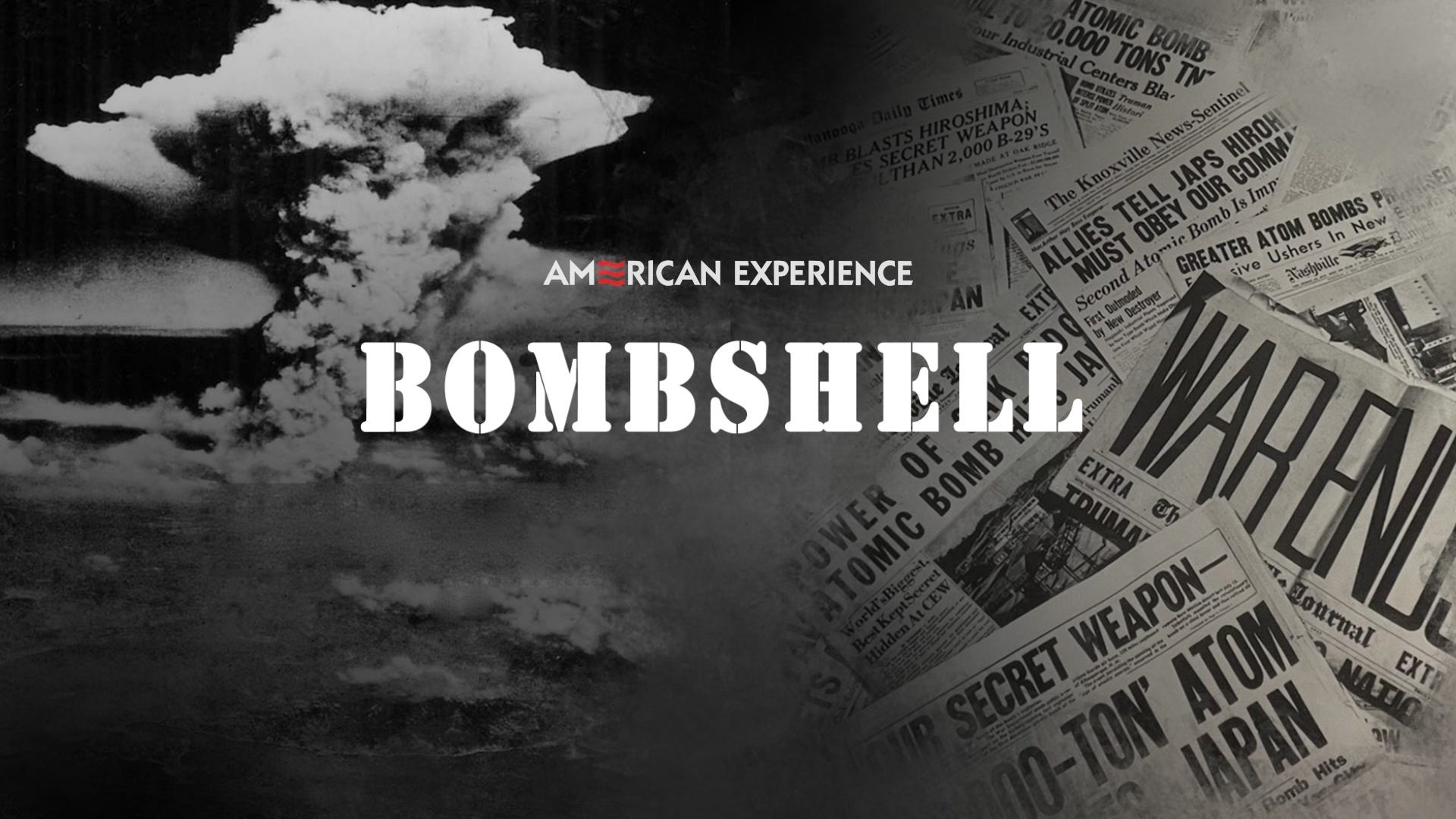
Film for which I served as adviser, and in which I appear as a frequent talking head, “Bombshell,” is airing nationally over PBS “American Experience” tonight. The post-Hiroshima response in America is a subject I’ve covered for more than four decades. Afterward you can let me know what you think of it in Comments here, or ask questions. Wall Street Journal review may or may not be behind the pay wall right now, and ditto for Foreign Policy—so I am excerpting from them below to make it easy for everyone. In many cities my current film “The Atomic Bowl” follows it tonight, but you can watch it anytime via PBS.org.
From “Bombshell” review in The Wall Street Journal:
Not to be confused with movies about Fox News or Hedy Lamarr, “Bombshell” isn’t just a film about the atomic bomb either. Or the Manhattan Project. Or the spin U.S. authorities tried to put on the dangers of nuclear radiation, post-Hiroshima. It seems, unavoidably, to read as an allegory about artificial intelligence.
In some ways, “Bombshell”—an “American Experience” presentation written and directed by Ben Loeterman—is also a parable, about two men, both journalists, one fascinated with the scientific developments and devoted to doing the bidding of his government during wartime, the other more concerned with long-term humanity.
An émigré from what is now Lithuania, William L. Laurence had created the role of science writer at the New York Times and was “loaned out” to the Army Corps of Engineers when Leslie R. Groves—director of the A-bomb-developing Manhattan Project—needed someone malleable to write press releases during the project’s near-total press blackout. Laurence toed the Groves line—that any reports of radiation poisoning out of the Pacific theater were “pure propaganda”—and won a postwar Pulitzer for reporting on matters he, and his newspaper, had covered up during the development of the bomb, and its aftermath.
John Hersey, now far better known than Laurence, wrote “Hiroshima,” a report on the destruction of the Japanese city of 300,000, which consumed an entire issue of the New Yorker magazine a year after the bombing….
AI isn’t going to leave people with their skin peeling off, and “devastation” might be overreach in predicting its effects on society, but the tweaking of information by Groves and company—something, we are told, that was eventually countered by such journalists as Hersey, Charles H. Loeb, Wilfred Burchett and the photojournalist Yoshito Matsushige—mirrors the hazy predictions made now about artificial intelligence, generated by people with a vested interest in its success. “Bombshell,” narrated by Ann Curry, contains a lot of history that viewers will likely know about the development of atomic energy, Albert Einstein and the A-bomb—anyone who saw “Oppenheimer” will be familiar with much of what is contained here, especially in the early going. But it’s also a cautionary tale. “It has never been the habit of the scientists of this country or the policy of this government to withhold from the world scientific knowledge,” said President Harry S. Truman. That is something “Bombshell” establishes wasn’t true in 1945, and might very well not be now.
And from Foreign Policy:
Why do we need a free and independent press? In our current, deeply cynical age, when distrust of the media has reached extraordinarily levels and many Americans are tuning out the news altogether, it is easy to lose sight of why U.S. democracy has long depended on dogged reporters—free from government censorship—to hold leaders accountable. At a moment when every major outlet faces intense pressure from Donald Trump’s administration, the need to defend the fourth estate has rarely felt more urgent.
A new documentary from the PBS American Experience series steps into this void, offering a provocative history that brings to life the dangers that arise when government secrecy and control overwhelm press freedom.
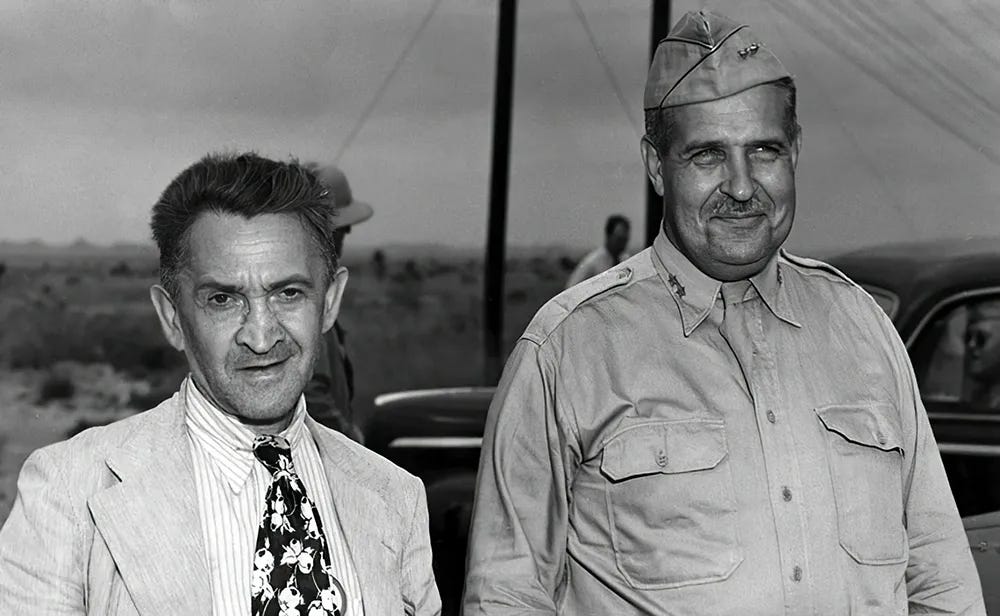
Bombshell examines how U.S. newspapers covered the decision to drop atomic bombs on Hiroshima and Nagasaki. The documentary traces the career of New York Times science writer William L. Laurence, who in the spring of 1945 was selected by Maj. Gen. Leslie Groves (see photo below) to serve as the press writer and official historian of the Manhattan Project. Groves brought Laurence to the top-secret Los Alamos laboratory in New Mexico, granting him extensive access to the project’s operations. Working under military supervision, Laurence squandered both his opportunity and his credibility, becoming a mouthpiece for government propaganda rather than a voice committed to telling the truth.
The heroes of the film are journalists working outside U.S. institutions. A Japanese photographer a Hiroshima newspaper, Yoshito Matsushige, took the only surviving photographs right after the bomb dropped; he only stopped when he was overcome by what he saw. The U.S. military later seized the pictures.
Black intellectuals including Langston Hughes, Zora Neale Hurston, and W.E.B. Du Bois were among the first to criticize how the United States deployed science and were acutely attuned to the racialized, anti-Asian bias shaping those decisions. Hurston called Truman the “butcher of Asia.” Du Bois called him “one of the greatest killers of our time.” As Ohio State University historian Felecia Ross notes, “The Japanese were people of color, just like they are, so there is an understandable skepticism.” The film also highlights Charles Loeb, a Black journalist for the Cleveland Call and Post, whose reporting focused on the long-term effects of the radiation on the populus.
Leslie Nakashima, a reporter born in Hawaii, was living in Japan when the bombs fell. Traveling by train to Hiroshima, he immediately encountered the carnage—the “sea of destruction” as one of the film’s commentators put it. Nakashima recorded what he saw and published a syndicated article, “Hiroshima as I Saw It,” offering one of the most unflinching contemporary accounts of the devastation. Images in the film show how some articles at the time raised questions about Nakashima’s credibility, labeling him in headlines as a “Jap newsman.” When Nakashima’s column appeared in the Times, the paper included Groves’ opinion: “Japanese reports of deaths from radioactive effects of atomic bombing are pure propaganda.”
In response to such reporting, military officials and government scientists, including Robert Oppenheimer, whom the film depicts as complicit in the cover-up, moved to minimize how bad the effects of radiation would be. When Groves acknowledged before Congress in November 1945 that radiation was killing people, he dismissed the danger by calling it a “pleasant way to die.” George Weller, a Chicago Daily News journalist, defied military restrictions and went to Nagasaki. But when he shared the graphic pieces he wrote out of patriotism with Gen. Douglas McCarthur’s headquarters, they didn’t see the light of day for decades. Meanwhile, Laurence was awarded a Pulitzer Prize for his role in shaping the official narrative.
The cone of silence finally collapsed in 1946, when the New Yorker, a magazine better known at the time for lighter fare and humor, published John Hersey’s 31,000-word masterpiece, “Hiroshima.”
Yet even after Hersey shattered the official narrative, the government moved quickly to impose a new one. President Truman promoted civil defense programs that, as the film shows, reassured Americans they could survive the bomb by ducking under dining room tables or retreating to suburban underground bomb shelters. More consequentially, Henry Stimson, Franklin Roosevelt’s former secretary of war, published an article in Harper’s Monthly, “The Decision to Use the Atomic Bomb.” Receiving coverage comparable to “Hiroshima,” the piece argued that the bomb saved over a million American and Japanese lives by averting a U.S. invasion of the mainland and bringing the war to an end. Groves worked with MGM on a film characterized by the experts in the film as pro-bomb propaganda that simply repeated the story for a mass audience. This “lesser evil” narrative—one that the film’s experts largely agree is a myth—has endured to the present day.
Journalists of the era underestimated the power of the government’s secrecy apparatus, and as a result the United States has never fully reckoned with the horrors unleashed in the summer of 1945.
Bombshell is an outstanding production, featuring gripping and often gruesome imagery, a compelling narrative, and first-rate expert analysis. Some of the material will be familiar to students of the period, particularly the debates over why the United States dropped the bomb. Yet many viewers will be surprised by the extent of the government’s efforts to censor knowledge of what occurred before, during, and after the bombings, as well as the work of the journalists working on the margins to tell the full, true story.
Greg Mitchell is the author of more than a dozen books, including (with Robert Jay Lifton) “Hiroshima in America,” “Atomic Cover-up,” and the recent award-winning “The Beginning or the End: How Hollywood—and America—Learned to Stop Worrying and Love the Bomb.” He has directed four documentary films since 2021, including the current “The Atomic Bowl” and “Atomic Cover-up” coming this fall).
Can’t wait. The Nagasaki documentary was outstanding.